What is melanoma?
Melanoma is a type of skin cancer that originates in melanocytes.
Melanocytes are cells that produce the pigment that gives skin its color. The pigment is known as melanin.
In its initial phase, melanoma usually appears as a new spot or mole that looks different from the rest, or as an existing mole that changes in size, shape, or color.
What are the main signs?
- Asymmetry: One half of the mole does not match the other half.
- Border: The edges are irregular, ragged, notched, or blurred.
- Color: It has various colors or shades (brown, black, reddish, white, or blue).
- Diameter: The diameter is larger than 6 millimeters (the size of a pencil eraser), although they can be smaller.
- Evolution: The mole changes in size, shape, color, or elevation, or presents new symptoms such as itching, pain, or bleeding.
What are the causes?
- Sun exposure: UV rays (UVA) especially severe sunburns.
- Genetics and moles: family history or presence of moles.
- Phototype: people with fair skin and light eyes are more vulnerable.
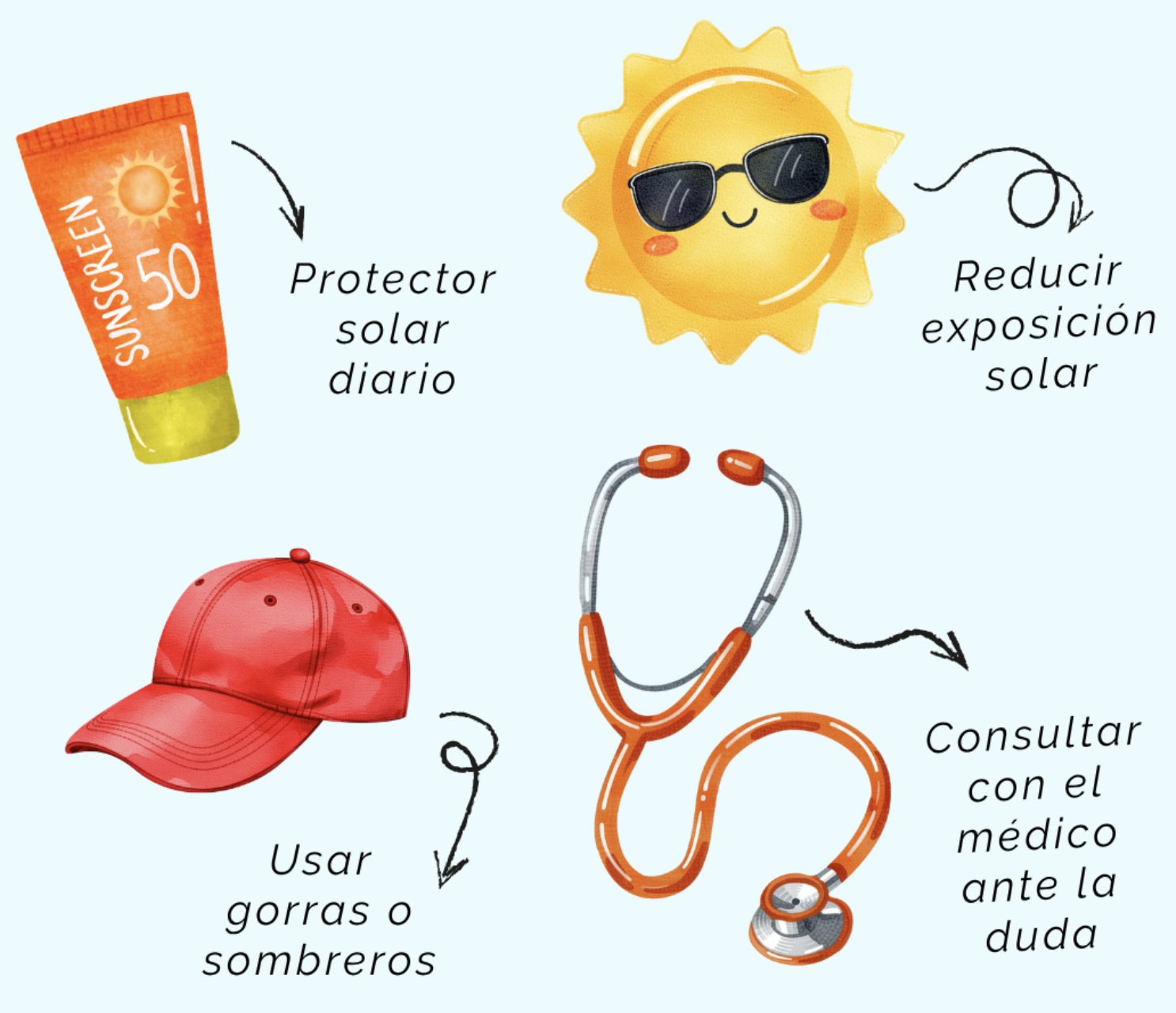
How can we protect ourselves?